
The Meeting Matters Team · 2026-11-14
Having a baby is often described as a happy time, so many new mothers in Pakistan feel guilty or ashamed when they feel low, anxious or empty instead. Postpartum depression is common, it is not your fault, and it is treatable.
A mother has thoughts of harming herself or the baby, hears or sees things that are not there, is extremely confused, or cannot care for herself or the baby. Contact emergency services or go to the nearest hospital. Do not wait.
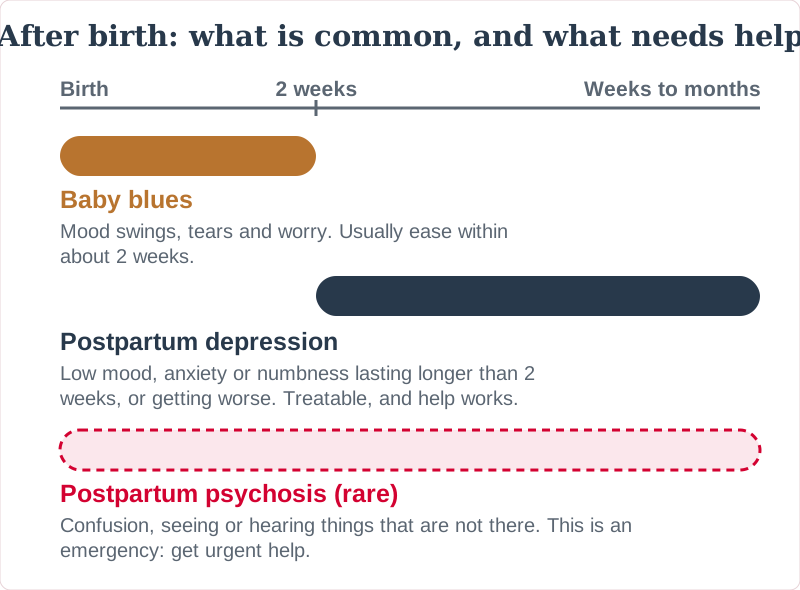
Baby blues, depression and psychosis
These three are different, and it helps to know which is which.
What it can feel like
What she may feel
- Sad, empty, hopeless or tearful most of the day
- Constant worry, panic, or fears that something will happen to the baby
- Losing interest in things, including the baby
- Guilt, or feeling like a bad mother
What family may notice
- Trouble sleeping even when the baby sleeps, or sleeping far too much
- Changes in appetite, extreme tiredness
- Irritability or anger
- Withdrawing from family
Why it happens
There is rarely one cause. Common contributors include hormonal changes, exhaustion, a difficult birth, a history of depression or anxiety, and stress at home. For many women in Pakistan, pressure from family expectations, limited rest, little practical support, and a feeling that they must not complain can add to the burden. Postpartum depression can also affect fathers and partners.
How it is treated
- Talking therapy: CBT and supportive counselling help with negative thoughts, anxiety and coping. Read about our postpartum depression treatment and depression therapy.
- Practical support: sleep, shared night feeds where possible, help with housework, and time for yourself.
- Medication: sometimes recommended by a doctor or psychiatrist. If you are breastfeeding, ask a doctor which options are suitable. Do not start or stop medication on your own.
What family can say, and what to avoid
Helpful
- "I'm here, and you're not alone in this."
- "Let me take the baby while you rest."
- "Shall we see a doctor or psychologist together?"
Hurtful
- "Be grateful, you have a healthy baby."
- "Every mother goes through this."
- "You are just being dramatic."
Questions people ask
Can fathers or partners get postpartum depression?
Yes. New fathers and partners can experience low mood and anxiety after a birth, often linked to sleep loss, pressure and worry. Support is available for them too.
Can I have therapy while looking after a newborn?
Online sessions are convenient for new mothers who cannot easily travel. Our psychologists offer a private, judgement-free space in Urdu, English or Punjabi.
See also signs of depression vs normal sadness.
This article is general information, not a diagnosis or a substitute for professional care. If you or someone else is in immediate danger, contact your local emergency services or go to the nearest hospital.
If you would like to talk to a psychologist, request an appointment or message us on WhatsApp. We usually reply within about 30 minutes, and fees are confirmed when you book.