
Muhammad Naushad Anjum · 2026-08-02
When people book their first career counseling session with us, most expect something close to a personality test — answer some questions, get a list of suitable jobs, done. I've been doing this for over 15 years, since founding The Meeting Matters in 2010, and I can count on one hand the number of sessions that actually stayed that simple. Almost every career question, once you sit with it for more than ten minutes, turns out to be about something else too.
It's Rarely About the Job Itself
Someone comes in saying they're not sure if they picked the right degree, or whether to leave a stable job for something riskier. By the second question, we're usually talking about a fear of disappointing parents, a fear of starting over at thirty, or a quieter fear that they won't be good at anything else. The career question is real, but it's sitting on top of something psychological that needs its own attention before any practical plan will actually stick. This is why career counseling at our clinic combines practical exploration of your strengths and interests with real psychological support — a list of "suitable careers" doesn't help much if the anxiety or self-doubt underneath it is still driving the decision.
The Family Pressure Layer
In Pakistan specifically, I'd say family expectation is present in some form in most of the career conversations we have — pressure to pursue medicine, engineering, or a government position regardless of genuine fit, or pressure to stay in an unfulfilling but "respectable" job rather than risk a change. This isn't something we try to talk clients out of; family relationships matter, and dismissing that pressure rarely helps. Instead, we work on helping clients have honest conversations with their families about what they actually want, and on separating "what my family expects" from "what I'm afraid of" — because those two pressures often get tangled together and treated as one.
Career Change Later in Life Isn't a Failure
A meaningful share of our career counseling clients aren't students — they're professionals in their thirties, forties or later, considering a real change. There's often an unspoken belief that changing direction later means the earlier years were wasted, or that starting over signals failure. In practice, the clients who make late career changes thoughtfully — rather than impulsively — tend to bring real, transferable strengths from their earlier career that they didn't expect to still be useful. Part of our work is simply helping people see what they're actually bringing with them, rather than treating a change as starting from zero.
Burnout vs. the Wrong Career — How to Tell the Difference
This is one of the most common things we untangle. Burnout can look exactly like "I picked the wrong career" — the same exhaustion, dread, and loss of motivation show up either way. But the fix is completely different: burnout usually needs rest, boundaries and workload changes within the same field, while a genuine mismatch needs an actual change in direction. Making that call too quickly, in either direction, tends to backfire. If what you're describing sounds more like workplace burnout or general work-related stress than a fundamental mismatch, that's worth exploring directly before assuming the whole career is wrong.
What a Session Actually Involves
We start by understanding your strengths, values and what's genuinely important to you — not just what you're good at, but what you want your working life to feel like. From there, we work through whatever is driving the indecision, whether that's fear of failure, family pressure, or a genuine sense that something isn't fitting. The goal isn't to hand you an answer; it's to help you build the confidence and clarity to make a decision you can actually follow through on, one step at a time.
When It's a Workplace Issue, Not an Individual One
Sometimes what looks like an individual career question is actually a symptom of a broader workplace problem — poor management, an unsustainable culture, or a team under chronic stress. For organizations dealing with this at scale, we also run corporate mental health workshops, which is a different, team-level version of this same work.
Frequently Asked Questions
Is this the same as career coaching?
It's related, but goes further — alongside practical guidance, we address the anxiety, self-doubt or family pressure that often sits underneath career indecision, which most career coaching doesn't touch directly.
Do I need to know what's "wrong" before booking a session?
No — many clients start with only "I feel stuck," without being able to name why. That's a completely reasonable starting point; naming it is often the first part of the work.
Can this help if the real issue is anxiety, not the career itself?
Yes — if what's underneath your career questions turns out to be broader anxiety, we address that directly. Career counseling and individual therapy often overlap more than people expect.
Do you offer this online?
Yes — I'm mostly available for sessions online given a busy travel schedule, and career counseling works well in that format since it's largely a structured conversation rather than something requiring an in-person setting.
If you're somewhere between "I don't love my job" and "I have no idea what I actually want," that's a reasonable place to start a conversation, not a sign you need to have it figured out first. You can read more about how we approach career counseling, or book a session directly. If you'd rather talk it through first, message us on WhatsApp.
If work leaves you drained rather than unsure, read workplace burnout: signs, causes and how to recover.
Career Counseling in Islamabad and Online
If you are a student choosing a subject group, degree or university, see our page on career counseling for students, with a 20% student discount on every session. If you are a working professional considering a change or dealing with burnout, see our career counseling service. Sessions are available in person at our F-11/1 Islamabad clinic and online across Pakistan. You can also read about free and low-cost counselling options in Pakistan or book an appointment.
Based in the capital? Our psychologist in Islamabad page covers the F-11/1 clinic, the psychologists who see clients in person, their days and fees.
About the Author
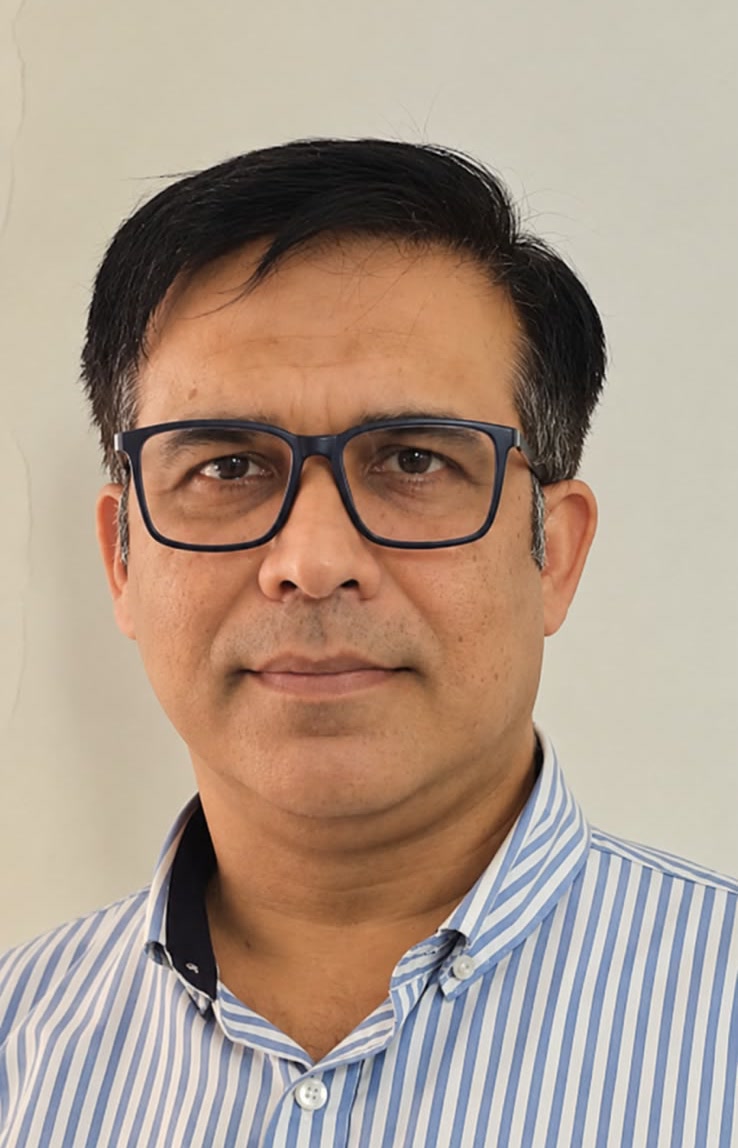
Muhammad Naushad Anjum
Founder & Lead Psychologist — Couples, Marriage & Relationship Counselling
Muhammad Naushad Anjum is the Founder of Meeting Matters Clinic, established in 2010 with the vision of bringing evidence-based, academically sound, and internationally benchmarked counselling services to Pakistan and Pakistanis abroad. He is a UK and UAE registered psychologist, with an MPhil and MSc in Psychology, and is a member of the European Association for Aviation Psychology and the International Society of Air Safety Investigators. He has served as consultant psychologist to the employee assistance programmes of BBC, Optum and Workplace Options since 2012, and, as CEO of Meeting Matters Global, leads its Employee Assistance Program, delivered for organisations including Shifa International Hospital, Islamabad. His specialist areas include relationship counselling, couple therapy, and family counselling. Through Meeting Matters, he focuses on selecting, training, and supporting a culturally sensitive team of psychologists who serve clients in Pakistan and overseas through in-person and online therapy. He is registered with the UK Health and Care Professions Council (HCPC) and works online with Pakistanis in the UK, the UAE and across the world, in English, Urdu or Punjabi. See our pages for Pakistanis in the UK (themeetingmatters.com/pakistani-psychologist-uk) and in the UAE and Gulf. Note: Mr. Naushad has a busy travel schedule and thats why he is mostly available for online sessions. His booking is handled by our Client Facing Team through normal booking lines based on availability.
What Muhammad helps with: